2030 Agenda for Sustainable Development and development assistance
The 2030 Agenda for Sustainable Development is expected to advocate for more inclusive and sustainable development objectives. In view of the key role for social protection for social and economic development, extending adequate social protection to all the population, is reflected in the post-2015 agenda. Social protection systems can be in fact a powerful tool for eradicating poverty, reducing the levels of inequality, promoting social inclusion and thus boosting inclusive development.
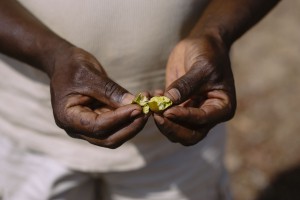
Photo credit: “Shea fruit” by CIFOR (CCBY 2.0 via Flickr).
Resources
This brief presents key aspects of universal social protection, and highlights how it is anchored in the current international legal and policy framework. It summarizes the progress that has been achieved so far and delimits the concept from other ideas and terms that are currently present in policy discussions. It also presents some key indicators…
The paper provides regional and global estimates of the costs and financing gaps of target 1.3 of the Sustainable Development Goals (SDGs) relating to social protection and analyses a number of options for filling those financing gaps in the developing countries using domestic and external resources. The paper considers four policy areas (excluding health) of…
The ILO policy resource package “Extending social security to workers in the informal economy: Lessons from international experience” serves as a reference for policy makers, workers’ and employers’ organizations and other stakeholders engaged in the development of social protection strategies, or the planning, design, implementation and monitoring of systems and schemes. This practical tool can…
The ILO's General Survey 2019 , compiled by the ILO Committee of Experts on the Application of Conventions and Recommendations (CEACR). The Survey (published under the title Universal social protection for human dignity, social justice and sustainable development) focuses on the ILO’s Social Protection Floors Recommendation, 2012 (No. 202), which calls for basic income security…
El Panorama Social 2018 analiza temas cruciales para entender y actuar ante los desafíos estructurales que enfrentan los países de América Latina y el Caribe en la actual coyuntura económica y social, especialmente en el marco de las transformaciones en curso en los mercados de trabajo. Incluye nuevas revisiones de la metodología utilizada por el…
This paper examines the interplay between the obligations related to the 'family' that States have assumed through various human rights treaties adopted over the decades, and the recent commitments undertaken under the 2030 Agenda for Sustainable Development. International human rights instruments recognize the 'family; as the fundamental unit of society and include a variety of…
Building on the content of the previous reports, the Spotlight Report 2018 dives more deeply into the policies, resources and actions that will actually be necessary to implement the 2030 Agenda, based in part on proposals and ideas that have already been discussed or attempted in different parts of the world. It highlights policies and…
Key Messages Migration isn’t driven by a lack of water and sanitation services, but providing services can support successful migration. The barriers faced by migrants make achieving the SDGs’ ambitions of universal access more challenging. Challenges stem from failures in governance, not the amount of water available, numbers of migrants or rates of migration. The…
Key messages Migration can contribute to improving access to reliable, affordable modern energy services (SDG target 7.1) through higher incomes for migrants and the sending of remittances. The informal or irregular status of many migrants is a barrier to universal access to modern energy services. Migrants in informal settlements and displaced people often experience a…
At the global level in 2015 countries set in motion the most far reaching and ambitious development agenda of our time, the 2030 Agenda for Sustainable Development. In Asia and the Pacific, countries have already begun translating this ambitious agenda into action and many have already set up the national architecture for coordinating and promoting…
Despite the recent slowdown of the global economy and the weakening of Africa’s economic performance with the attendant implications for inclusion and sustainability, the long-term growth outlook for Africa remains promising. The region's long-term fundamentals remain strong as the pace of growth stands to benefit from a demographic dividend and an industrialization and structural transformation…
In this paper we examine the Sustainable Development Goal 3 through the lens of state obligations to respect, protect and fulfil people’s human rights entitlements. We critique some of the Transforming Our World: The 2030 Agenda for Sustainable Development "follow-up and review" arrangements for the health goal, SDG3. To assist in this analysis, we draw…
ASEAN countries have committed themselves to the implementation of two parallel but interrelated processes: the ASEAN Community Vision 2025 (ASEAN Vision 2025) and the United Nations 2030 Agenda for Sustainable Development (2030 Agenda). From the outset ASEAN Member States underlined the complementarity of these two agendas in their efforts to uplift the standards of living…
This report takes stock of the changing nature of increasingly complex risks in Asia and the Pacific, and the stresses and shocks that are affecting a diverse region's prospects for achieving the SDGs. It highlights the effects of selected natural hazards, commodity shocks and pollution shocks on the region’s fundamental human systems and describes efforts…
This report provides a comprehensive and authoritative assessment of progress, gaps and challenges in the implementation of the Sustainable Development Goals from a gender perspective. It monitors global and regional trends in achieving the SDGs for women and girls based on available data, and provides practical guidance for the implementation of gender-responsive policies and accountability…
The 2030 Agenda for Sustainable Development contains a very ambitious poverty reduction schedule: According to Sustainable Development Goal 1 extreme poverty shall be completely eradicated within the next 15 years (SDG 1.1), and also other forms of poverty shall be reduced within the same period at least by half the proportion of men, women and…
The briefing explores a critical set of redistributive policies – in the areas of social protection, health, education and taxation – that are key to tackling economic inequality from a human rights perspective. It also explains the equally crucial ‘pre-distributive’ policies – actions governments should take to ensure the rules of the marketplace are equitable…
Latin American and Caribbean region is facing a complex set of economic and social circumstances that threaten the conditions needed for further progress towards the goal of eradicating all forms of poverty and ensuring that no one is left behind, as required by the 2030 Agenda for Sustainable Development. These temporary challenges are compounded by…
The ILO's World Employment and Social Outlook: Trends 2017 takes stock of the current global labour market situation, assessing the most recent employment developments and forecasting unemployment levels in developed, emerging and developing countries. It also focuses on trends in job quality, paying particular attention to working poverty and vulnerable employment.
Ce premier rapport 2016 sur la situation des droits économiques, sociaux et culturels de 42 pays est une initiative de L’Observatoire international sur les droits économiques, sociaux et culturels (ObIDESC). Créé par le Collège Universitaire Henry Dunant, en collaboration avec l’OIDEL et la chaire UNESCO de l’Université de La Rioja il a pour objectif de…

