Eligibility criteria and entitlement conditions (including conditionalities)
In accordance with human rights standards, complying with the principle of non-discrimination means that all eligibility criteria must be objective, reasonable, and transparent. Targeted social protection must be implemented with the intention of progressively providing universal coverage.
Under international human rights law, States have an obligation to immediately meet minimum essential levels of the rights of food, health, housing, education and social security. The enjoyment of these rights, by all individuals, is not conditional on the performance of certain actions or the meeting of requirements. Rather, these are inherent rights which are essential to the realization of human dignity.
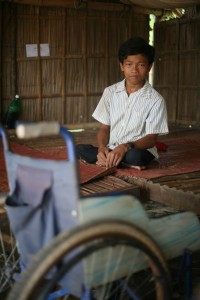
Photo credit: “MORNG HONG LY” by Exceed Worldwide (CCBY 2.0 via Flickr).
Resources
The ILO's General Survey 2019 , compiled by the ILO Committee of Experts on the Application of Conventions and Recommendations (CEACR). The Survey (published under the title Universal social protection for human dignity, social justice and sustainable development) focuses on the ILO’s Social Protection Floors Recommendation, 2012 (No. 202), which calls for basic income security…
This overview summarises the final findings of the Welfare Conditionality project (2013-2018). It presents analysis on the effectiveness, impacts and ethics of welfare conditionality, and the sanctions and mandatory support that underpin this approach. Discussion draws on analyses of qualitative data generated in interviews with 52 policy stakeholders, 27 focus groups conducted with practitioners, and…
In recent years, the World Bank and IMF have played an influential role in shaping national social protection policies. Social protection comprises a significant share of World Bank loans, reaching almost 10 per cent of lending to low-income countries in 2017, while around 10 per cent of IMF loans include conditionality linked to social protection.…
The From Protection to Production (PtoP) project is a multi-country impact evaluation of cash transfers in sub-Saharan Africa. The project is a collaborative effort between the FAO, the UNICEF Eastern and Southern Africa Regional Office and the governments of Ethiopia, Ghana, Kenya, Lesotho, Malawi, Zambia and Zimbabwe. PtoP activities are mainly funded by the Regular…
In recent years, the International Monetary Fund (IMF) has re-emerged as a central actor in global economic governance. Its rhetoric and policies suggest that the organization has radically changed the ways in which it offers financial assistance to countries in economic trouble. We revisit two long-standing controversies: Has the policy content of IMF programmes evolved…
This document analyses the evolution of the population coverage and investment of conditional cash transfer (CCT) programmes, which are poverty reduction initiatives, in the countries of Latin America and the Caribbean over the past 20 years. The analysis is based on up-to-date, detailed information from the database on non-contributory social protection programmes in Latin America…
This Issue Brief explores some key gender dimensions of conditional cash transfers through the lens of the human rights-based approach to social protection. In many cash transfer programmes around the world, women are the principal beneficiaries on the assumption that this not only improves the nutrition, health and education of children, but can also enhance…
This brief evaluates Uganda's Expanding Social Protection programme.
This paper assesses the effectiveness of the proxy means test (PMT) targeting methodology. It brings together international evidence to show that it is both inaccurate and arbitrary. The mechanism suffers from high in-built design errors, additional errors introduced during implementation, and infrequent surveys, meaning that it cannot respond to the dynamic nature of household incomes.…
Cash transfers have been increasingly adopted by countries worldwide as central elements of their social protection and poverty reduction strategies. A growing number of studies provide rigorous evidence on the impact of cash transfers, and the role of specific cash transfer design and implementation features in shaping outcomes. This rigorous review of the impact of…
Informed by the results of several investigative efforts, St Lucia is now at an advanced stage in developing and implementing an integrated social protection system. The Ministry of Social Transformation, Local Government and Community Empowerment has made major strides in establishing a social protection platform for St Lucia with gender equity and child sensitivity as…
Establishing gender and child responsive social protection schemes that ensure universal access to health care including maternity care, and basic income security, will protect women and their families from the effects of economic shocks and crises that may result in job and wage losses. UN Women and UNICEF through the UN Joint Programme on Social…
Eastern Caribbean countries are currently developing and implementing substantial social safety net reforms. Governments of six Eastern Caribbean countries conducted social safety net assessments in 2009 – 2010, with the support of UN Women and UNICEF in partnership with the World Bank. These reforms, which have been ongoing for some years, have been based on,…
Eastern Caribbean countries are currently developing and implementing substantial social safety net reforms. In 2009 – 2010, UNICEF and UN Women in partnership with the World Bank supported the governments of six countries in the OECS sub-region to conduct national social safety net assessments. A striking feature of the social assistance landscape is the number…
The social safety net assessments conducted in Eastern Caribbean states in and around 2009 recommended that countries should develop a proxy means test (PMT) to replace the diverse approaches they were using to target poverty-related benefits. Proxy mean tests were argued to be an objective and transparent alternative mechanism, especially given the unreliability of income…
The social safety net assessments conducted in Eastern Caribbean states in and around 2009 recommended that countries should develop a proxy means test (PMT) to replace the diverse approaches they were using to target poverty-related benefits. Proxy mean tests were argued to be an objective and transparent alternative mechanism, especially given the unreliability of income…
Development Pathways undertook a series of experiments which aimed to compare conditional and unconditional transfers. This brief outlines the results of these experiments.
This paper explains From Protection to Production (PtoP), a four-year agreement between FAO at DFID to study the impact of cash transfer programmes on household economic decision-making and the local economy in sub-Saharan Africa.
Social policy is fundamental to the quest for social justice, women’s rights and gender equality. Defined broadly as a set of public interventions that affect the welfare and well-being of citizens, social policy is typically understood to cover issues such as income security, health, housing and education. It is therefore crucial to the reduction of…
This study investigates an old question that has re-emerged in social policy making and in analyses of global social development: to what extent does targeting and size of social transfers matter for poverty? Using multilevel logistic regression and Cross- National Data Center in Luxembourg (LIS) income data for 40 middle- and high-income countries, we show…

